
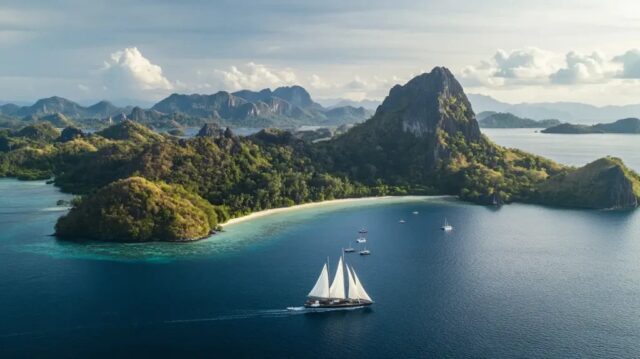
Komodo offers a raw coastline where hidden coves and silent bays whisper of a land still recovering its own wildness.
If you’re reading this, you likely hope to see more than just the famous dragon trails: you want to catch glimmers of less-trod shores, quiet coral gardens, and mornings when the island feels entirely your own.
Here, I’ll walk you through those lesser-seen corners: how to reach them, when to visit, what to carry, and how to move through this rugged archipelago with respect and quiet wonder.
Embracing Komodo Beyond the Dragon Paths
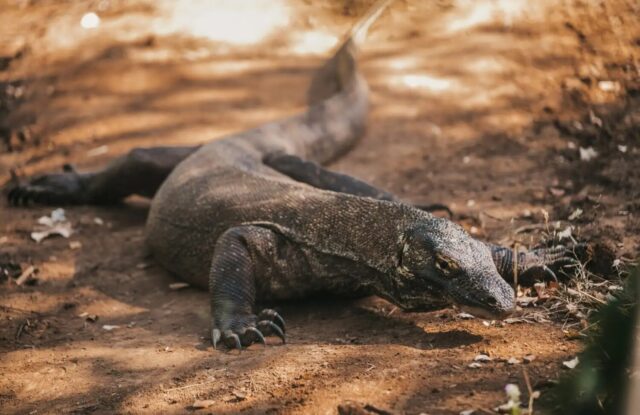
Komodo National Park is often framed around its legendary reptile, but the archipelago holds stories of tides, reefs, volcanic ridges, and remote beaches.
The larger islands – Komodo, Rinca, and Padar, share the stage with numerous smaller islets, some uninhabited, some lightly touched by fishermen’s huts.
The hidden shores lie where conventional tours rarely pause: narrow gulfs behind headlands, submerged reefs alive with rainbow fish, mangrove inlets, and sands altered by coral fragments that shift color with light and wave.
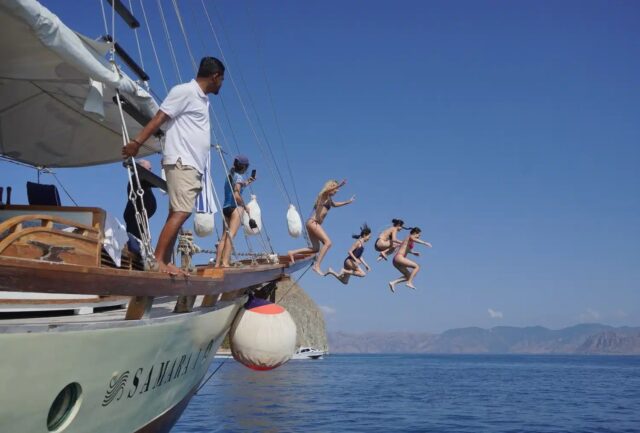
To access many of those places, you’ll want to consider a yacht trip Komodo, a more flexible, immersive way to slip into silent anchorages off the beaten route. Rather than being ferried on fixed schedules, you can pause when a hidden bend of reef beckons, or linger in a remote inlet long after the larger boats have departed.
Such a trip offers several advantages:
- Access to remote coves unreachable from standard day-tours
- Flexible pace: stay longer at snorkeling sites or secluded beaches
- Morning and evening light: those hours illuminate reefs and sands in ways midday doesn’t
- Intimacy with nature: fewer crowds, more quiet
Hidden Shores Worth Seeking
Once you venture beyond the main island trails, a network of wild, often unnamed shores opens up. Each corner of Komodo seems to hold its own micro-world, a hidden lagoon, a wind-sculpted ridge, a patch of sand that blushes pink in the right light. These are not the places of big crowds but of slow discoveries, where silence feels almost alive.
Pink and Private Beaches
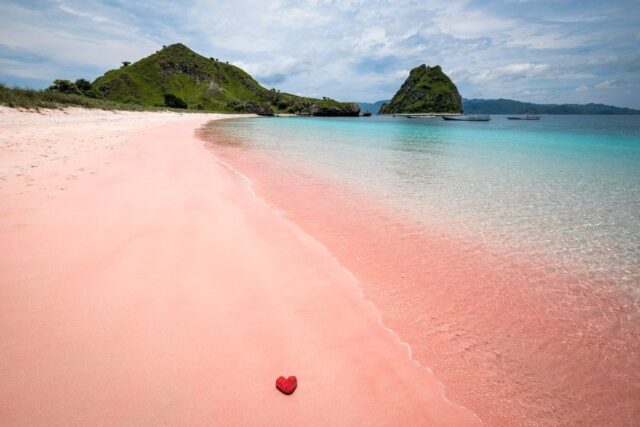
Few things stop one in silence like a shoreline tinted faint rose by crushed coral and shell. Komodo’s (and adjacent islets’) pink beaches are known, but often in a crowd. If your skipper knows where to slip off course, you might find quieter variants.
One such beach lies tucked behind a small jutting headland, its pinkness flickering only in early light or late afternoon.
On these shores:
- Approach slowly; reefs may extend farther than they appear
- Drop anchor in deeper water, then tender to shore to avoid damaging coral
- Be ready for changes in tide: some soft sandy stretches vanish at high tide
Snorkeling just off these sands rewards you with branching coral gardens where fish swirl in gentle currents, and sea turtles sometimes drift by in the shallows.
Mangrove-Laced Inlets and Secrets of the Tide
On the windward side of some islets you’ll find narrow inlets lined with mangrove roots dipping into brackish water. These are quiet refuges for juvenile fish, crustaceans, and the occasional eagle ray.
Stand quietly at the water’s edge and listen: the hush is often broken only by birds calling or leaves stirring in the tidal draw.
These zones demand gentle movement:
- Use shallow draft tenders
- Avoid paddling too close to roots
- Time your visit near high tide to reveal the full mangrove fringe
Hidden behind cliffs or ridges, such inlets are sometimes only 50 meters wide but feel like entire worlds cut off from the sea.
Rocky Reefs and Underwater Cliffs
Beyond beach and mangrove lies an underwater topography that often mirrors the drama above. From steep reef walls to drop-offs colored in violet sponges and soft corals, Komodo’s marine realm hides its peaks in depth.
Diver or snorkeler, if you drift over these vertical reefs in afternoon light, you’ll notice schools of fusiliers, batfish, and even reef sharks patrolling the shadows.
A few pointers:
- Dive early or late, when sunlight slants across vertical walls
- Watch for currents: narrow channels may channel rips
- Use reef hooks or drift dives to remain stationary without fin damage
Many of these reefs frame hidden bays, so emerging from a dive may feel like surfacing inside a secret amphitheater of stone and water.
When to Travel and How the Seasons Shape Silence
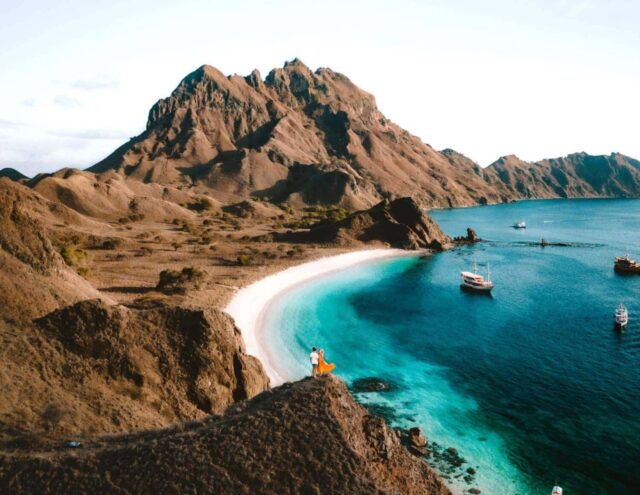
Komodo lies in a region where dry months are clearer, seas calmer—and those are the months you hope for when seeking hidden shores. The recommended window is April through October.
In contrast, monsoon and transitional months (November–March) bring stronger winds, murkier water, and a rougher sea. Some hidden inlets become inaccessible then, and currents in the Sape Strait intensify.
Here’s a rough seasonal guide:
| Period | Sea Conditions | Best For | Watch For |
| April–June | Clear, moderate swell | Snorkeling, hidden bays | Occasional rain in late period |
| July–August | Calmest, great visibility | Diving, remote routes | Peak crowds on main islands |
| September–October | Clear but warming currents | Linger longer at quiet spots | Some rain, but less frequent |
| November–March | Rough seas, reduced visibility | Limited hidden-shore access | Strong winds, storms |
If you can, try to avoid the absolute peak months (July–August) for visiting hidden fringes, they’ll still be possible, but you’ll compete more heavily with boats heading out from Labuan Bajo. Also, note that Komodo National Park is introducing stricter visitor quotas to curb overtourism.
How to Prepare: Gear, Permits, Local Care
Before you set out toward those quieter corners, take stock of the essentials.
Gear and Packing Advice
- Mask, snorkel, fins with soft blades
- Reef-safe sunscreen, rashguard, hat
- Waterproof dry bag and reef-friendly footwear
- Light first aid, reef hook (if diving), underwater camera
- Reusable water bottle (refill when possible)
Permits, Rangers and Park Rules
Every landing or walk into Komodo’s islands must be accompanied by a ranger authorized to guide. In many places you’ll need to present your visitor permit, and rangers often lead with a careful eye for both safety and conservation.
If you are anchoring in sensitive marine zones, check whether those areas fall into “no anchor” zones, some reefs are protected at the perimeter.
Respect and Stewardship
- Never step on coral
- Avoid touching wildlife or disturbing nests
- Pack out all your trash
- Use local guides and services to support community stewardship
- Speak softly; hidden shores often survive thanks to silence
Hidden Itinerary Suggestions
Here’s a sample two-day route to chase quieter edges:
Day 1: Depart Labuan Bajo → East Komodo Channel → Pink and Remote Beaches
- Early morning sail past Komodo’s eastern cliffs
- Anchor near a less-visited pink sand cove for snorkeling
- Drift snorkel over a nearby reef wall
- Afternoon: approach mangrove-fringed inlet for a quiet walk at low tide
Day 2: Dawn Reef Dive → Rocky Cove → Return via Seductive Bay
- Before sunrise, slip to a deep reef wall for drift diving
- Late morning: tender into hidden cove behind rocky outcrop
- Swim or snorkel in sheltered bay
- After lunch, sail back via sweeping sea lanes
- Evening spotlight on the reef flats as shallow water glows
You’ll want to pace this so you’re not rushing—moments of pause often reveal the most.
Safety, Local Realities and Final Reflections
Komodo’s waters are dynamic. Tides run strong, currents shift, and reef edges can surprise. Always listen to your skipper or dive leader. Approach reef edges slowly after reconnaissance, and never assume safe inlets remain passive.
Culturally, this region holds longstanding relationships between sea and shore: fishermen still practise traditional methods, villages engage in reef restoration, and rangers work seasonally migrating with dragons.
If you pass a small coastal settlement, ask permission before landing, share greetings, perhaps buy a fish or woven mat, small gestures matter.
It’s easy to lose track of time here, and perhaps that’s the point: the island asks not for speed, but for quiet attention. Hidden shores, gentle reefs, whispering mangroves, all hold stories waiting to soften your pace.
When the sea wind brushes your cheek on deck, and sunlight filters through shallow water to score silver across the reef, you’ll know why you journeyed not just for dragons, but for the wild corners they call home.