
In a busy dental practice there’s a familiar scene: the morning huddle ends, the first patient is seated, the chairside monitor lights up, and you realise your day isn’t just about handing over instruments – it’s about handing over information.
Technology is no longer a novelty in dentistry. It has quietly become a bridge between you and your patient. In this article we’ll explore how technology enhances patient communication in dentistry – how it shifts that bridge from shaky to solid, how it frees you to focus on the human side, and how you can adopt the right tools to make the experience more empathetic, efficient and trusted.
Why communication matters in dental care
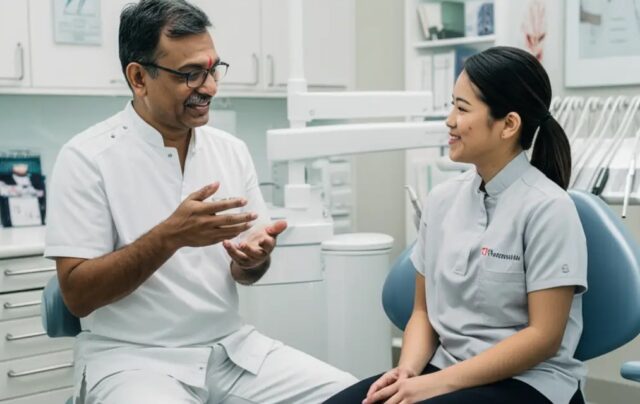
Picture a patient arriving for a routine check-up. They’re a little anxious, perhaps unclear about why you want a new scan, or unsure of what comes next after treatment. Strong dentist–patient communication does more than explain procedures – it builds confidence, reduces anxiety, improves treatment adherence, and reflects in better outcomes.
Research has shown that good communication “allows dentists to accurately and effectively pass on essential oral-healthcare information” and “increases patients’ adherence to improved treatment outcomes”.
When technology enters the equation it’s tempting to focus on flashy features – but what really matters is how those features support clarity, trust and connection.
How tech tools shape everyday conversations
In the midst of your day, you might wonder: how does a scheduling app or an intra-oral camera really affect what happens between you and a patient? Think of these tools as your quiet assistants – ones that help you share information, free mental bandwidth and invite your patient into dialogue.
For example, with online scheduling and automated reminders you reduce no-shows and free up your team for meaningful conversations. Software that handles reminders, intake forms and follow-ups means fewer administrative interruptions.
A key part of this is trusting technology to do routine tasks so you don’t have to think about them. Here is an example worth noting: if you want to explore a specialized platform to support that trust, you might look to Trust AI in your check-list of options. When you commit to tools that you and your team can rely on, you make space to engage more deeply with the person in the chair.
Before vs After adopting communication tech
| Situation | Before | After |
| Appointment reminders | Mainly phone calls, frequent errors | Automated SMS/email, fewer misses |
| Patient understanding | Verbal explanation, some uncertainty | Visual data, interactive discussion of scan/images |
| Follow-up instructions | Verbal hand-off, lost in memory | Automated message or app link with care steps |
Visual and interactive tools: making the invisible visible
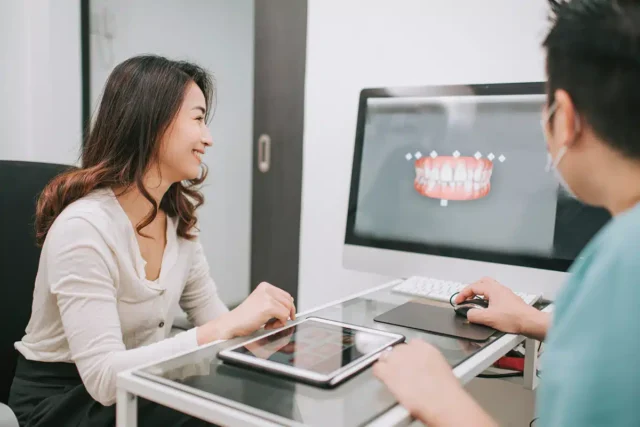
One of the most transformative ways technology enhances communication is by giving patients a view into their oral health that feels tangible. Instead of explaining in abstract terms, you can show them an intra-oral camera image, a 3D scan or a digital model. That means less guessing, fewer misunderstandings and more engagement. For instance, visual tools have been shown to “improve patients’ understanding” of conditions and the reasons behind recommended treatments.
When a patient sees clear images and you walk them through options side-by-side, you’re no longer asking them to take your word for it – you’re inviting them into the decision-making. This technique reduces anxiety and builds trust, because the patient feels acknowledged and informed.
Did you know? Patients who can visualise their condition via digital imagery often accept treatment plans at higher rates – improved case-acceptance of 10-20% has been reported.
Multi-channel communication: meeting patients where they are
We live in an age where patients expect more flexibility: online booking, SMS reminders, secure messaging, mobile check-in. Technology introduces channels that match modern lifestyles – which means communication happens not just in the chair but before and after the visit.
- Online booking or self-scheduling allows patients to pick times that fit them, reducing friction and making your front desk more efficient.
- SMS or email reminders reduce no-shows and allow brief, friendly check-ins between visits.
- Secure messaging or app-based platforms give patients a space to ask questions post-treatment – which supports them, improves clarity and strengthens your relationship.
When you structure communication into multiple channels it means the patient feels supported and heard – not just during treatment but throughout their oral-health journey.
Workflow impact: freeing your attention for the person
Perhaps one of the most practical returns of communication technology is the effect on workflow. When you automate reminders, intake, follow-up and even visual education, you reduce the mental load. You gain time – not just minutes, but the kind of time that allows you to lean in, listen, empathize.
For example:
- The front desk receives fewer calls asking “when is my appointment?” or “what do I need to do?”
- You spend less chair-time explaining how to find forms or instructions.
- Your team spends more time discussing patients’ feelings, questions or concerns rather than managing logistics.
That shift has ripple effects. Your patient feels attended to rather than hurried. Your team feels less stressed. And you, as the clinician, are in a better place to engage, build trust, and deliver care from a position of clarity and connection.
Choosing and integrating the right tools
Selecting communication technology is not about buying the most features. It’s about choosing a solution that aligns with your practice’s workflow, nurtures patient trust and integrates smoothly with your systems. Consider these practical questions:
- How well does the tool integrate with your existing patient-management system? Without that, you’ll duplicate data or create friction.
- Does it give you clear visibility into communication metrics? For example, open rates for messages, appointment confirmations, etc.
- Do patients find it intuitive? If it’s hard to use, adoption will lag. The right solution “should be easy enough that anyone can use it with no coding required”.
- How does it support your communication goals – more clarity, fewer surprises, better follow-up?
- What training/support is available for your team? Smooth adoption depends on everyone feeling confident.
Embracing empathy alongside efficiency
In the end, communication technology is a tool – and its value lies in how it supports the human side of dentistry. When you use tech to automate reminders, visualise conditions, give access to questions and share care steps, you aren’t replacing your voice or your empathy; you’re amplifying them.
When a patient says “I finally understood what’s going on,” or “I appreciate how you explained this,” that’s not just good tech – it’s good communication. It’s trust built. It’s extended care.
Bringing it together

When you’re managing multiple patients and a growing caseload, even small workflow tweaks can mean less stress – and more attention for the person in the chair. Adopting technology for patient communication doesn’t have to be overwhelming. Start with one channel – maybe an automated reminder system – then layer in two-way messaging or visual aids. Each step helps you turn logistics into connection.
By integrating visual tools, multi-channel engagement and workflow efficiencies you don’t just enhance patient communication – you elevate the patient experience. And when your patient feels understood, respected and empowered, you’ve done more than treated a tooth – you’ve supported a person.
In adopting the right tools with intention, you strengthen your role not just as a clinician, but as a communicator, guide and ally in your patient’s oral-health journey. That shift, small though it may feel, can change the tone of visits, the quality of relationships and the outcomes you both share.