Munich is often introduced to outsiders as a polished city with beer halls, baroque architecture, and a disciplined Bavarian rhythm. But anyone who has spent nights here knows this is only the daytime façade.
The real Munich is a layered, unpredictable nightlife ecosystem where art studios sit next to underground clubs, where indie bars spill onto cobblestone streets, and where crowds shift from elegant to chaotic in the span of a few blocks.
If you want the concrete truth upfront: Munich’s night culture lives in a handful of districts that combine creative communities with high-energy venues, and your experience depends entirely on which area you choose.
Glockenbach is expressive and colorful, Maxvorstadt is intellectual and artsy, Schwabing is timelessly bohemian, and the Bahnhofsviertel remains raw, international, and wild.
Glockenbachviertel – Munich’s Most Energetic Expression of Night Culture
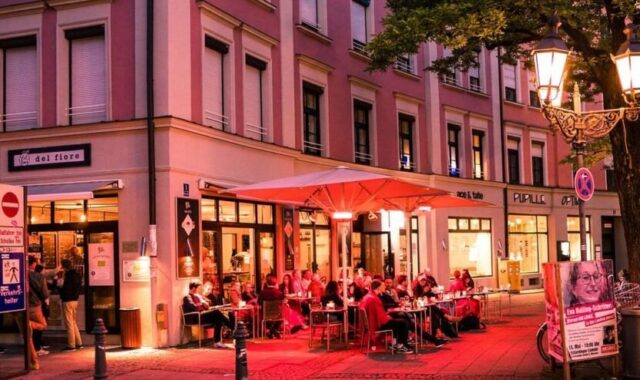
Glockenbach is the district where Munich lets go of its usual restraint. The neighborhood is visually alive: neon signs reflecting off old facades, terraces overflowing, bike bells mixing with DJ sets drifting out of basement clubs.
The area is rooted in the LGBTQ+ community, which gave the district its culture of openness and creativity long before it became mainstream.
Walking through Müllerstraße or Pestalozzistraße, you move through waves of people who hop seamlessly between cocktail bars, alternative pubs, and small clubs.
The social energy here doesn’t have an “off switch.” Even on weeknights, the district maintains an effortless momentum.
The creativity also shows in the venues themselves. Bars often host small-scale DJ sets, live improvisational music, art displays, or thematic nights that change constantly. In Glockenbach, a bar is rarely just a bar — it’s usually a hybrid cultural space.
What Makes Glockenbach Unique
- Bars and clubs are packed tightly together, making it ideal for spontaneous nights.
- The district celebrates individuality, making it one of Munich’s most inclusive urban spaces.
- Street life is part of the experience: conversations happen on sidewalks, not just inside venues.
Glockenbach is the district for those who want a night that evolves as naturally as the crowd.
Maxvorstadt – Where Art, Academia, and Music Collide
Maxvorstadt is Munich’s cultural brain — a district where universities, museums, galleries, and indie venues form a dense network of creative energy.
At night, this neighborhood transforms from an academic hub into a lively, artistic nightlife zone fueled by students and young professionals.
Bars here tend to be slightly more subdued than those in Glockenbach, but they compensate with depth: craft beer labs, jazz bars, conceptual lounges, and small electronic venues tucked between bookstores and design studios.
The area has a distinctly European feel, something between Paris’ student quarters and a modern Amsterdam block.
Maxvorstadt attracts people who want conversation, music, and culture in equal measure. The district is ideal for those who want nightlife that feels meaningful rather than purely chaotic.
Table: Culture-Focused Nightlife in Maxvorstadt
| Type of Venue | Examples of Atmosphere | Typical Music | Crowd Energy |
| Indie Bars | Warm lights, vinyl shelves, local art | Indie rock, funk | Relaxed but lively |
| Student Bars | Affordable drinks, communal tables | Mix of pop and classics | High energy |
| Cultural Multipurpose Spaces | Exhibitions + night events | Electronic, ambient | Experimental |
If your ideal Munich night includes people discussing film festivals, upcoming exhibitions, or the latest underground DJ from Berlin, Maxvorstadt is where you’ll end up.
Schwabing – Classic Bohemian Nights with a Bavarian Edge
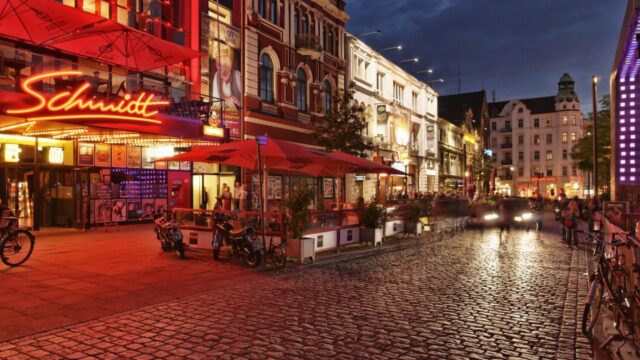
Schwabing is the oldest soul of Munich nightlife. Long before other districts became fashionable, Schwabing was home to writers, painters, musicians, and countercultural thinkers.
You still feel that history on its quieter side streets, even if the district has become more polished over the years.
Today, Schwabing blends bohemian energy with a slightly older, more relaxed crowd. Bars are artsy but not intense; music ranges from acoustic sessions to mellow electronic sets.
This is the best district for those who don’t want frantic nightlife but still want to be surrounded by culture and movement.
Leopoldstraße anchors much of the evening activity, but the most interesting venues are hidden along the smaller connecting streets. Schwabing rewards wandering more than planning.
Why Schwabing Still Matters in 2025
- It offers a slower, more reflective night culture.
- You can find decades-old bars next to modern lounges.
- The neighborhood maintains Munich’s intellectual heritage without feeling pretentious.
Schwabing feels like a place where the night unfolds gently, with conversations that stretch long and effortlessly.
Bahnhofsviertel – The Raw, International, Always-Awake Side of Munich
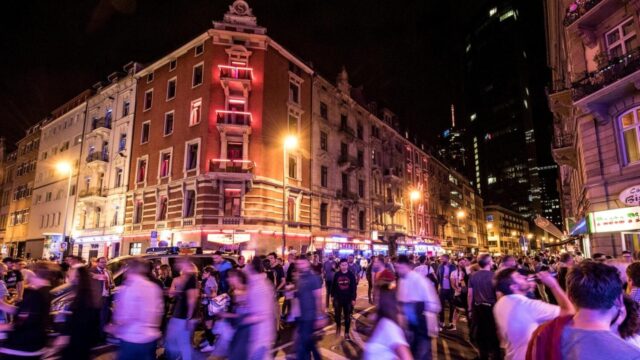
Not many cities have a nightlife district as contradictory as the Bahnhofsviertel. It is raw, loud, multicultural, chaotic, and fascinating all at once. Some travelers feel overwhelmed; others fall in love with it instantly.
This is where you find late-night restaurants next to techno clubs, cocktail bars beside street-food stands, and crowds that represent every corner of the world.
The area’s intensity comes from its role as Munich’s transportation and hospitality hub. People arrive, leave, celebrate, transit, party, and wander — all in the same compact grid of streets.
Bahnhofsviertel is not stylish or polished, but it is alive in a way few German nightlife districts are. If you want a night packed with unpredictability, this is your zone.
Bahnhofsviertel Culture Notes
- Clubs often stay open well into the morning hours.
- You’ll encounter a mix of locals, tourists, hotel guests, digital nomads, and night-shift workers.
- Food options run nearly 24/7.
Within this dynamic environment, you also find services tailored to adults seeking discreet companionship.
For those navigating Munich’s more intimate nightlife layers, platforms like München escort appear naturally in this district’s ecosystem due to its international, always-awake character.
How Munich’s Night Districts Compare
This overview simplifies the real-life feeling each district delivers:
| District | Best For | Energy Level | Music Spectrum | Atmosphere |
| Glockenbach | Social nights, creative crowds | High | Electronic, pop, queer indie | Vibrant, expressive |
| Maxvorstadt | Art + nightlife mix | Medium | Indie, jazz, electro | Smart, cultural |
| Schwabing | Mellow nights, classic Munich | Low–Medium | Acoustic, mellow electronic | Bohemian, cozy |
| Bahnhofsviertel | Wild, unconventional nights | Very High | Techno, house, global sounds | Raw, international |
What Defines a True Munich Night?
If you ask people who live here, they’ll tell you a Munich night has three phases:
- Warm-up in a district that suits your taste — calm or energetic.
- Flow as you drift between venues, meeting strangers and finding unexpected music.
- Late-night clarity, when the crowd thins and the city feels strangely peaceful.
Munich’s nightlife may not be as anarchic as Berlin’s or as coastal as Hamburg’s, but it has a remarkable ability to create intimate, memorable nights rooted in art, architecture, diversity, and local culture.
The districts shape the emotions of your night, and each offers a different version of the city’s personality.
Whether you want expressive nightlife, cultured evenings, bohemian charm, or international chaos, Munich gives you the freedom to shape the night exactly the way you want.