
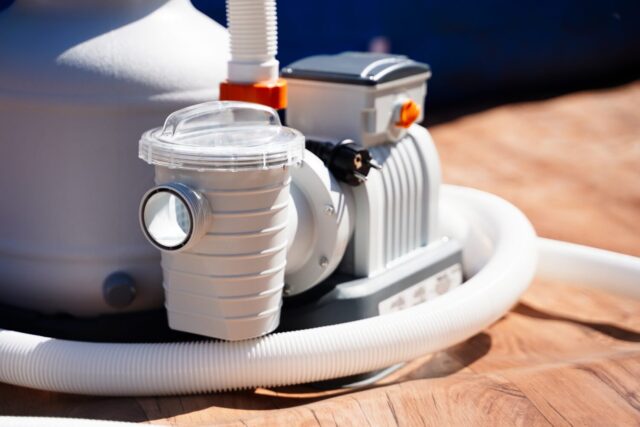
A typical backyard pool circulates thousands of gallons of water every day. What many pool owners do not realize is that nearly all water clarity problems trace back to one quiet piece of equipment doing the hardest job of all: the filter.
Even with perfect chemical balance, poor filtration leaves water dull, cloudy, or constantly fighting algae.
Choosing the right filter is about understanding how each system actually traps debris and how that matches your pool’s size, usage and maintenance style.
Before diving into the three main filter types, it helps to understand what filtration really does and why the differences matter more than most people expect.
Comparing Filter Types Side by Side
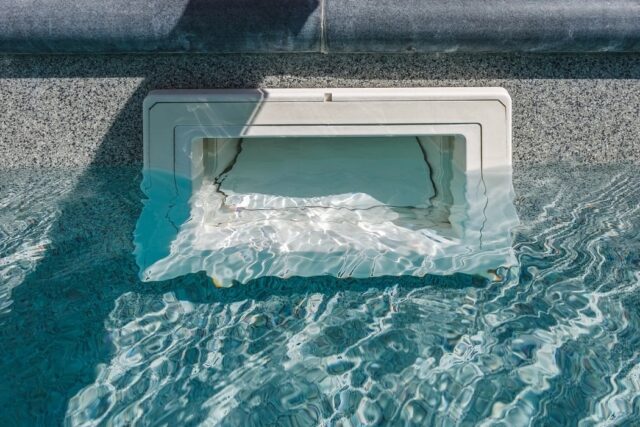
Choosing between filter types becomes easier when differences are viewed together.
| Feature | Sand | Cartridge | DE |
| Filtration range | 20 to 40 microns | 10 to 15 microns | 2 to 5 microns |
| Maintenance method | Backwashing | Rinsing cartridge | Backwash plus DE recharge |
| Water usage | High | Low | Moderate |
| Clarity level | Good | Very good | Excellent |
This comparison shows there is no universally superior option. The best choice depends on how much time you want to spend maintaining the system and how clear you expect the water to look under normal use.
How Pool Filtration Really Works
At its core, filtration is a mechanical process. Water is pulled from the pool, pushed through a filtering medium, and returned cleaner than it entered. What separates filter types is the size of particles they can trap and how consistently they perform over time.
In residential pools, filters are expected to handle everything from sunscreen oils to pollen, fine dust, and microscopic organic debris. The challenge is balancing efficiency with practicality. A filter that traps extremely fine particles often demands more attention, while a simpler system may require less work but allow small contaminants to pass through.
Filtration efficiency is measured in microns. The smaller the micron rating, the finer the debris removed. However, finer filtration is not always better if maintenance becomes overwhelming. That tradeoff is where filter selection becomes personal.
Most visible cloudiness in pools is caused by particles smaller than 20 microns, far finer than sand or grit you can see with the naked eye.
Professional guidance can make a significant difference. A local expert like Dolphin Pool service understands how regional conditions, seasonal debris, and equipment sizing influence real-world performance. When filters are undersized or mismatched to the pool, even the best technology struggles to deliver consistent results.
Getting advice early prevents years of frustration and unnecessary upgrades.
Sand Pool Filters Explained
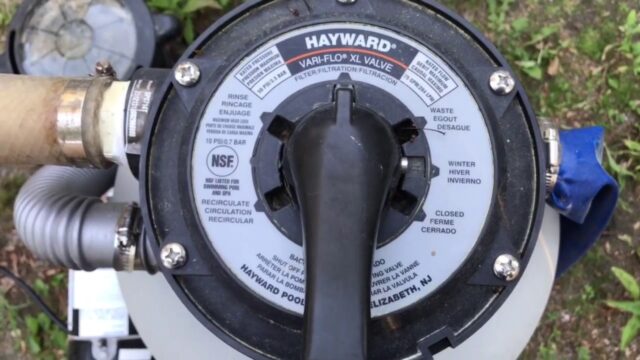
Sand filters are the most common option in residential pools, largely because they are simple and durable. Inside the tank, water flows through a bed of specially graded pool sand. As water passes through, debris becomes trapped between sand particles before clean water returns to the pool.
Sand filtration typically captures particles down to about 20 to 40 microns. While that is not the finest level available, it is sufficient for many backyard pools that are regularly maintained.
Why many homeowners choose sand filters:
- Minimal hands-on maintenance compared to other systems
- Backwashing cleans the filter quickly without opening the tank
- Long lifespan with sand replacement only every five to seven years
That said, sand filters do allow some fine debris to pass through. Pools surrounded by trees or exposed to heavy pollen may struggle with consistent clarity unless supported by good circulation and chemistry. Still, for owners who value simplicity and reliability, sand filtration remains a solid choice.
Cartridge Pool Filters Explained
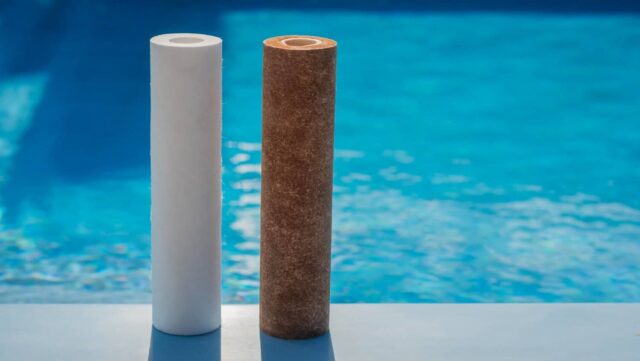
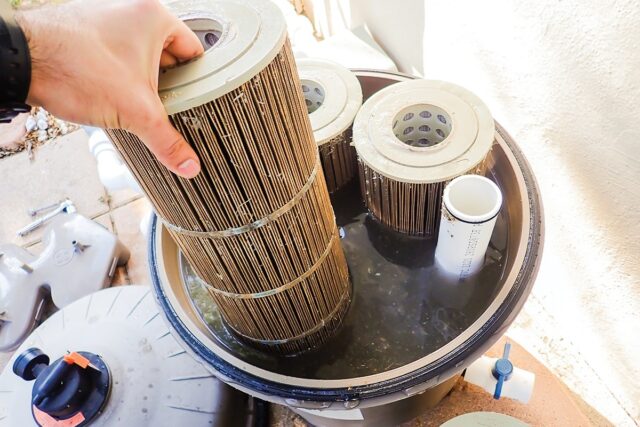
Cartridge filters use pleated fabric elements to trap debris as water flows through the material. These pleats dramatically increase surface area, allowing for better filtration without restricting flow.
Most cartridge systems capture particles down to 10 to 15 microns, which results in noticeably clearer water than sand filtration. Because there is no backwashing, cartridge filters also conserve water, making them popular in areas with usage restrictions.
Maintenance involves removing the cartridge and rinsing it with a hose every few weeks, depending on pool use. While this process takes more effort than backwashing, it avoids sending water and chemicals down the drain.
Key advantages of cartridge filtration:
- Better water clarity than sand
- Lower water waste
- Quieter operation and lower pump pressure
For homeowners who want a balance between clarity and manageable upkeep, cartridge filters often hit the sweet spot. When professionally sized and installed, they provide excellent performance with predictable maintenance intervals.
DE Pool Filters Explained
Diatomaceous earth, commonly called DE, offers the finest filtration available for residential pools. DE filters use grids coated with a fine powder made from fossilized diatoms. This powder forms an incredibly effective filtering layer.
DE systems can capture particles as small as 2 to 5 microns. The result is water clarity that often looks polished or glass-like, even in heavily used pools.
However, this performance comes with responsibility. DE filters require careful handling of the powder, proper disposal after backwashing, and periodic grid cleaning. Improper maintenance can reduce efficiency or cause pressure issues.
Important fact:
DE powder is effective because of its microscopic structure, not chemical action. It physically traps debris rather than dissolving it.
DE filtration is best suited for pool owners who prioritize water clarity and are comfortable with a more involved maintenance routine.
Which Pool Filter Is Right for Your Pool?
Selecting the right filter depends on several practical factors beyond filtration rating alone. Pool size, bather load, environmental debris, and personal tolerance for maintenance all matter.
A small residential pool with moderate use may perform beautifully with a cartridge system. A larger pool surrounded by trees might benefit from sand filtration for ease of cleaning. Pools used frequently for entertaining or competitive swimming often lean toward DE for unmatched clarity.
Final Thoughts on Pool Filter Types
Every pool has different needs, and the right filter is the one that fits both the water and the owner. Sand filters offer durability and ease. Cartridge filters deliver strong clarity with efficient water use. DE filters provide unmatched polish for those willing to invest time in maintenance.
Also read: Pool design for your needs
Rather than chasing the most advanced option, focus on consistency. A well-maintained filter of any type outperforms a neglected high-end system every time. When filtration aligns with your pool environment and routine, water stays clearer, equipment lasts longer, and pool ownership becomes far more enjoyable.